Buy duemmersee.eu ?
We are moving the project
duemmersee.eu .
Are you interested in purchasing the domain
duemmersee.eu ?
domain@kv-gmbh.de · 0541-91531010
Buy duemmersee.eu ?
What questions are there about subject-verb agreement?
Some common questions about subject-verb agreement include: 1. How do I know which form of the verb to use with a singular or plural subject? 2. What about collective nouns or indefinite pronouns - do they take a singular or plural verb? 3. How do I handle compound subjects, where there are multiple nouns or pronouns joined by "and" or "or"? 4. Are there any exceptions or irregularities to the standard rules of subject-verb agreement? 5. What are some common mistakes to watch out for when it comes to subject-verb agreement? **
What is the difference between Subject-Verb-Object (SVO) and Subject-Subject-Verb (SSV) sentences?
The main difference between Subject-Verb-Object (SVO) and Subject-Subject-Verb (SSV) sentences lies in the order of the elements. In SVO sentences, the subject comes first, followed by the verb, and then the object. In SSV sentences, there are two subjects followed by the verb. This difference in structure can impact the emphasis and clarity of the sentence, as well as the overall flow of information. **

Similar search terms for Subject-verb agreement
Top-Angebote
Products related to Subject-verb agreement:
-
Arcturus A Degree in a Book: Psychology by Alan Porter Everything You Need to Know to Master the Subject - in One Book!A perfect introduction for students and laypeople alike, A Degree in a Book: Psychology provides you with all the concepts you need to understand the fundamental issues. Filled with helpful diagrams, suggestions for further reading, and easily digestible features on the history of psychology, this book makes understanding the human mind easier than ever. Including the theories of Francis Galton, Sigmund Freud, Ivan Pavlov, and many more, it covers the whole range of psychological research. By the time you finish reading this book, you will be able to answer questions such as: How do we learn? Do groups make better decisions than individuals? How do we study the living brain? What are the components of personality?8,95 £*Shipping: 2,99 £Secure redirect to the provider
-
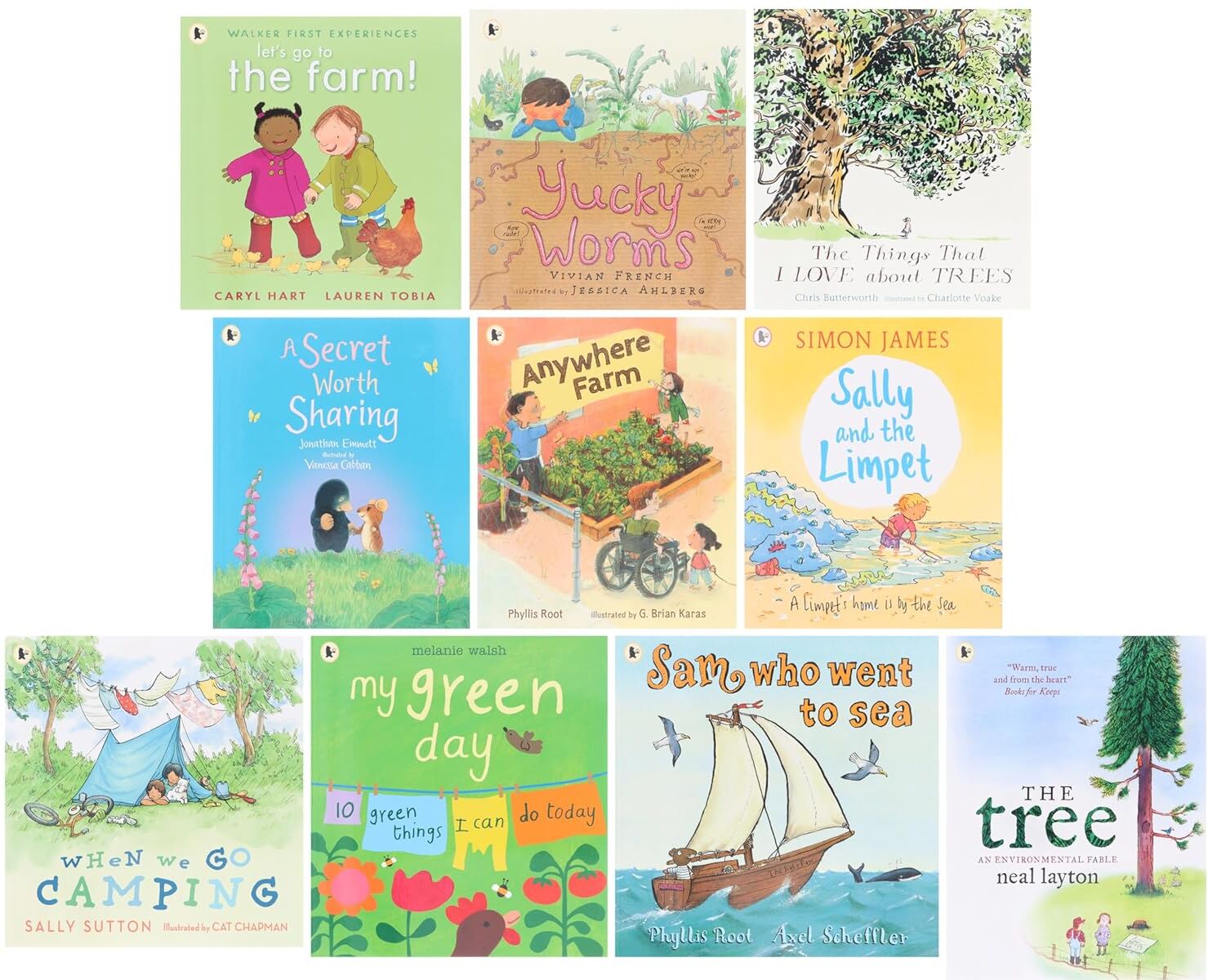
Walker Books UK Ltd The Great Outdoors 10 Picture Books Collection Set Nature, Trees, Wildlife, Farm, Camping & Adventure Stories for ChildrenThe Great Outdoors: 10 Wild and Wonderful Picture Books Collection Set Ignite a love of nature and outdoor adventure with The Great Outdoors – 10 Wild and Wonderful Picture Books Collection Set.This beautifully illustrated bundle introduces children to the magic of trees, farms, forests, wildlife, camping, seashores, and the joy of exploring the world around them. Packed with heartwarming stories, gentle messages, and rich nature themes, these books encourage imagination, curiosity, and a lifelong appreciation for the outdoors.Perfect for bedtime reading, early learning, classroom storytime, or little explorers who love adventure. Ideal for ages 3–7, preschoolers, nursery settings, and early readers. Titles in this Set: 1. The Things That I Love About Trees 2. The Tree 3. Sally and the Limpet 4. Anywhere Farm 5. When We Go Camping 6. A Secret Worth Sharing 7. Lets Go To The Farm! 8. Yucky Worms 9. My Green Day 10. Sam Who Went to Sea The Things That I Love About Trees A very young non-fiction picture book that looks at how a tree changes with the seasons, with charming illustrations by Charlotte Voake.Learn how a plum tree changes with the seasons in this charming... The Tree A delightful picture book with a wonderful twist which encourages young children to think about the way animals and humans live side by side.The tree. Home to a family of birds in their nest, squirrels... Sally and the Limpet When Sally pulls a limpet off a rock at the beach, it sticks to her finger – and nothing she, her family or her friends do can unstick it. Sally's teacher says that limpets live on the same rock for twenty years. So will Sally ever get the limpet off her finger? Anywhere Farm For an anywhere farm, here's all that you need: soil and sunshine, some water, a seed. When We Go Camping When we go camping, we bang in the pegs, Bang in the pegs, bang in the pegs. Guy ropes are tricky; they trip up your legs! A Secret Worth Sharing Mole's new friend, Mouse, is so special, he doesn't want to share her with anyone and decides to keep her secret. but some secrets are worth sharing. Lets Go To The Farm Let's go to the farm with Billy and Bee! There's SO much to do, and SO much to see! Baby lambs and guinea pigs, and chickens on the run, Let's get your wellies on and join in all the fun! Yucky Worms You can't be FREINDS with an earthworm... You can't even tell WHICH end is which! Or CAN you My Green Day Here are ten things we can all do to make every day a green day. Sam Who Went to Sea Sam, the river rat, dreams of going to sea. Day and night, whatever he is doing, his thoughts turn seawards.12,90 £*Shipping: 2,99 £Secure redirect to the provider
-
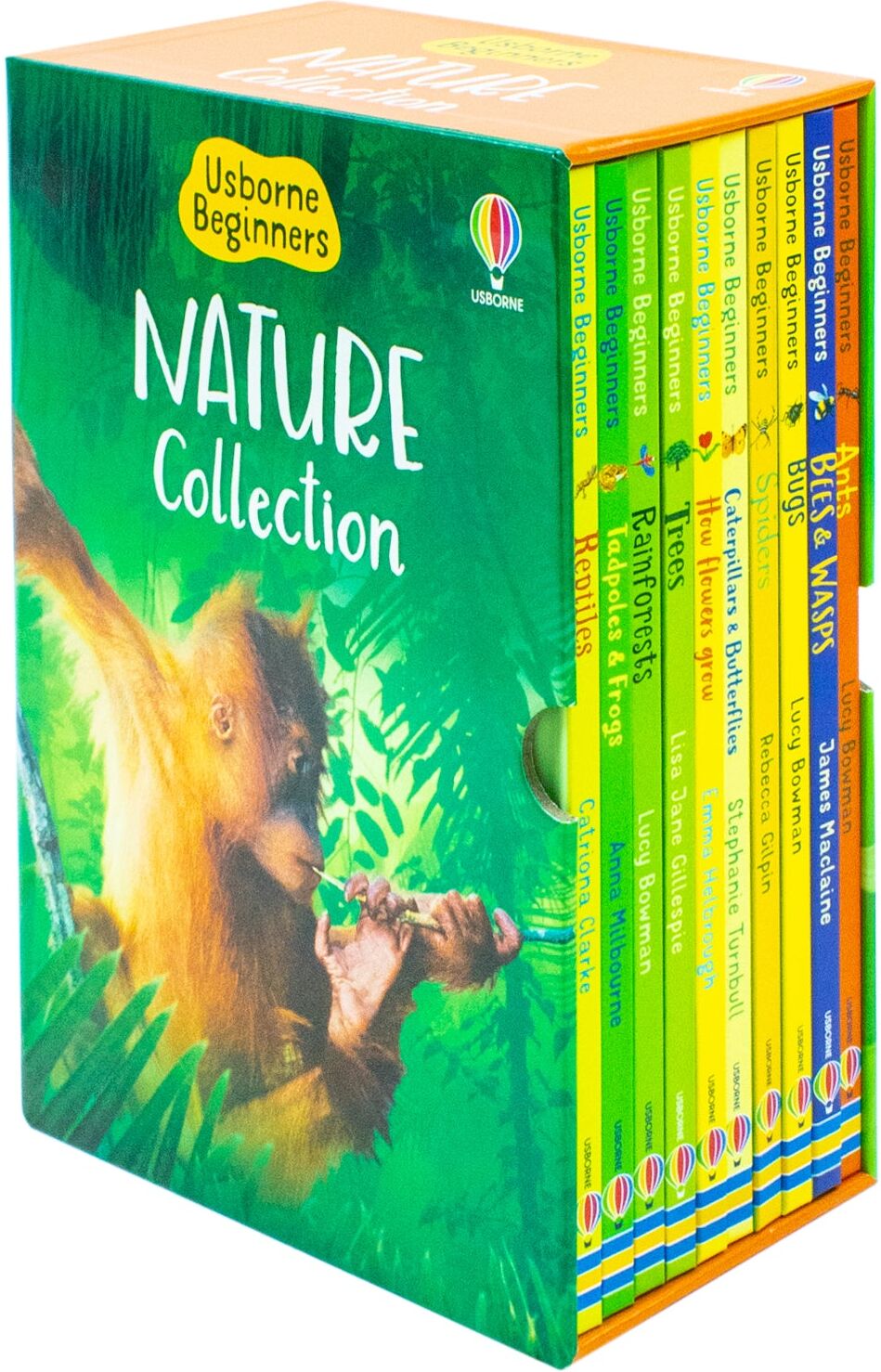
Usborne Publishing Usborne Beginners Nature Series – 10 Book Collection Set Children’s Wildlife & Nature Books (Ants, Bugs, Spiders, Trees, Rainforests) KS1 KS2Usborne Beginners Nature 10 Books Box Set Reptiles This is a fantastic brand new addition to the 'Beginners' series, designed to provide an informative introduction to trees and plant-life for young readers. Tadpoles and Frogs Vivid, full colour illustrations and photographs on every page, accompanied by short, informative text. Rainforest It offers a terrific reading practice for children who prefer fact to fiction. It is developed with a reading expert from Roehampton University to help young readers grow in confidence. Trees This is a fantastic brand new addition to the 'Beginners' series; designed to provide an informative introduction to trees and plant-life for young readers. How Flowers Grow How do flowers grow in dry deserts? How do animals help to spread seeds? Which flower smells like rotting meat? Caterpillars and Butterflies Usborne Beginners are colourful information books for children beginning to read on their own. Spiders Usborne Beginners are colourful information books for children beginning to read on their own. Bugs Usborne Beginners are colourful information books for children beginning to read on their own. Bees and Wasps A slim and unintimidating book which belies its contents - a wealth of information; much of which will be new even to adults. Ants Where do ants live? What do they eat? How much weight can they carry? Little children can find out the answers to these questions and much more in this simple introduction to the world of ants. Related Tags: Usborne, Usbourne14,99 £*Shipping: 2,99 £Secure redirect to the provider


-
Is "leben" a subject or a verb?
"Leben" is a verb in German. It means "to live" in English. It is used to describe the action of being alive or residing in a particular place. **
-
What is the order of subject, verb, and object in Latin?
In Latin, the typical word order is Subject-Object-Verb (SOV). This means that the subject of the sentence comes first, followed by the object, and then the verb. For example, "puella rosam amat" translates to "the girl loves the rose," where "puella" is the subject, "rosam" is the object, and "amat" is the verb. However, Latin is a highly inflected language, so word order can be flexible and the meaning of the sentence is often determined by the case and ending of the words rather than their position in the sentence. **
-
How is the agreement of the past participle with the auxiliary verb avoir done?
In French, the past participle agrees with the direct object when the auxiliary verb is avoir. However, this agreement only occurs when the direct object comes before the verb. If the direct object comes after the verb, there is no agreement. For example, in the sentence "J'ai mangé la pomme" (I ate the apple), the past participle "mangé" agrees with the direct object "la pomme" because it comes before the verb. But in the sentence "J'ai mangé une pomme" (I ate an apple), there is no agreement because the direct object "une pomme" comes after the verb. **
-
What is an auxiliary verb and a main verb?
An auxiliary verb, also known as a helping verb, is a verb that is used with a main verb to form a verb phrase. It helps to express the tense, mood, or voice of the main verb. Common auxiliary verbs include "be," "have," and "do." A main verb, also known as a lexical verb, is the primary verb in a sentence that carries the main meaning or action. It is the verb that is not preceded by an auxiliary verb in a verb phrase. Main verbs can express actions, states of being, or occurrences. **
Before the verb.
'Before the verb' refers to the placement of adverbs in a sentence. Adverbs are words that modify verbs, adjectives, or other adverbs. When an adverb is placed before the verb in a sentence, it typically provides information about how the action is being performed. For example, in the sentence "She quickly ran to the store," the adverb "quickly" is placed before the verb "ran" to describe how she performed the action of running. **
What is the personal form of the verb auxiliary verb?
The personal form of the auxiliary verb is the form that changes based on the subject of the sentence. For example, in the present tense, the personal forms of the auxiliary verb "to be" are "am" for the first person singular (I), "are" for the second person singular and plural (you), and "is" for the third person singular (he/she/it). These forms change to match the subject of the sentence and indicate who is performing the action. **
Top-Angebote
Products related to Subject-verb agreement:
-
Graco Verb Travel System, MerrickThe Graco Verb Travel System gives you a stylish and smooth ride for your child. It includes a SnugRide Lite Infant Car Seat (for baby from 4-30 lb), which connects to the stroller with a secure, one-second attachment.239,99 $*Shipping: 0,00 $Secure redirect to the provider
-
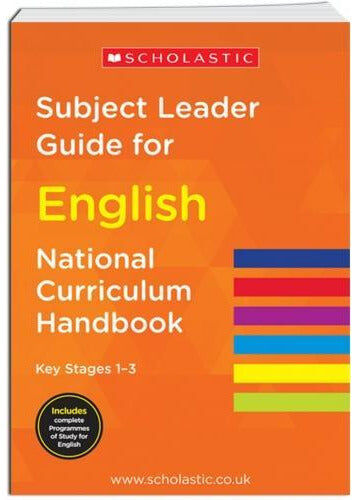
Scholastic National Curriculum Handbook Subject Leader Guide For English Key Stage 1-3National Curriculum Handbook Subject Leader Guide for English Key Stage 1-3 Description: Get ready for the biggest curriculum change in more than a decade! To help coordinators to deliver the new curriculum; Scholastic has published the first complete printed programme of study for key stages 1-3 in English. Each guide also provides a wealth of subject leader support including: an overview of the main changes to the curriculum; an overview of the subject leader's role at times of curriculum change; priority areas at each key stage; how to add creativity to the new curriculum; helpful subject leader's check-list. Scholastic; publisher of the best-selling 100 Lessons series; has partnered with Babcock Learning and Development Partnership (Devon Local Authority); one of the UK's leading school improvement services; to develop these essential subject guides.9,99 £*Shipping: 2,99 £Secure redirect to the provider
-
Arcturus A Degree in a Book: Psychology by Alan Porter Everything You Need to Know to Master the Subject - in One Book!A perfect introduction for students and laypeople alike, A Degree in a Book: Psychology provides you with all the concepts you need to understand the fundamental issues. Filled with helpful diagrams, suggestions for further reading, and easily digestible features on the history of psychology, this book makes understanding the human mind easier than ever. Including the theories of Francis Galton, Sigmund Freud, Ivan Pavlov, and many more, it covers the whole range of psychological research. By the time you finish reading this book, you will be able to answer questions such as: How do we learn? Do groups make better decisions than individuals? How do we study the living brain? What are the components of personality?8,95 £*Shipping: 2,99 £Secure redirect to the provider
-
Walker Books UK Ltd The Great Outdoors 10 Picture Books Collection Set Nature, Trees, Wildlife, Farm, Camping & Adventure Stories for ChildrenThe Great Outdoors: 10 Wild and Wonderful Picture Books Collection Set Ignite a love of nature and outdoor adventure with The Great Outdoors – 10 Wild and Wonderful Picture Books Collection Set.This beautifully illustrated bundle introduces children to the magic of trees, farms, forests, wildlife, camping, seashores, and the joy of exploring the world around them. Packed with heartwarming stories, gentle messages, and rich nature themes, these books encourage imagination, curiosity, and a lifelong appreciation for the outdoors.Perfect for bedtime reading, early learning, classroom storytime, or little explorers who love adventure. Ideal for ages 3–7, preschoolers, nursery settings, and early readers. Titles in this Set: 1. The Things That I Love About Trees 2. The Tree 3. Sally and the Limpet 4. Anywhere Farm 5. When We Go Camping 6. A Secret Worth Sharing 7. Lets Go To The Farm! 8. Yucky Worms 9. My Green Day 10. Sam Who Went to Sea The Things That I Love About Trees A very young non-fiction picture book that looks at how a tree changes with the seasons, with charming illustrations by Charlotte Voake.Learn how a plum tree changes with the seasons in this charming... The Tree A delightful picture book with a wonderful twist which encourages young children to think about the way animals and humans live side by side.The tree. Home to a family of birds in their nest, squirrels... Sally and the Limpet When Sally pulls a limpet off a rock at the beach, it sticks to her finger – and nothing she, her family or her friends do can unstick it. Sally's teacher says that limpets live on the same rock for twenty years. So will Sally ever get the limpet off her finger? Anywhere Farm For an anywhere farm, here's all that you need: soil and sunshine, some water, a seed. When We Go Camping When we go camping, we bang in the pegs, Bang in the pegs, bang in the pegs. Guy ropes are tricky; they trip up your legs! A Secret Worth Sharing Mole's new friend, Mouse, is so special, he doesn't want to share her with anyone and decides to keep her secret. but some secrets are worth sharing. Lets Go To The Farm Let's go to the farm with Billy and Bee! There's SO much to do, and SO much to see! Baby lambs and guinea pigs, and chickens on the run, Let's get your wellies on and join in all the fun! Yucky Worms You can't be FREINDS with an earthworm... You can't even tell WHICH end is which! Or CAN you My Green Day Here are ten things we can all do to make every day a green day. Sam Who Went to Sea Sam, the river rat, dreams of going to sea. Day and night, whatever he is doing, his thoughts turn seawards.12,90 £*Shipping: 2,99 £Secure redirect to the provider
-
What questions are there about subject-verb agreement?
Some common questions about subject-verb agreement include: 1. How do I know which form of the verb to use with a singular or plural subject? 2. What about collective nouns or indefinite pronouns - do they take a singular or plural verb? 3. How do I handle compound subjects, where there are multiple nouns or pronouns joined by "and" or "or"? 4. Are there any exceptions or irregularities to the standard rules of subject-verb agreement? 5. What are some common mistakes to watch out for when it comes to subject-verb agreement? **
-
What is the difference between Subject-Verb-Object (SVO) and Subject-Subject-Verb (SSV) sentences?
The main difference between Subject-Verb-Object (SVO) and Subject-Subject-Verb (SSV) sentences lies in the order of the elements. In SVO sentences, the subject comes first, followed by the verb, and then the object. In SSV sentences, there are two subjects followed by the verb. This difference in structure can impact the emphasis and clarity of the sentence, as well as the overall flow of information. **
-
Is "leben" a subject or a verb?
"Leben" is a verb in German. It means "to live" in English. It is used to describe the action of being alive or residing in a particular place. **
-
What is the order of subject, verb, and object in Latin?
In Latin, the typical word order is Subject-Object-Verb (SOV). This means that the subject of the sentence comes first, followed by the object, and then the verb. For example, "puella rosam amat" translates to "the girl loves the rose," where "puella" is the subject, "rosam" is the object, and "amat" is the verb. However, Latin is a highly inflected language, so word order can be flexible and the meaning of the sentence is often determined by the case and ending of the words rather than their position in the sentence. **
Similar search terms for Subject-verb agreement
-
Usborne Publishing Usborne Beginners Nature Series – 10 Book Collection Set Children’s Wildlife & Nature Books (Ants, Bugs, Spiders, Trees, Rainforests) KS1 KS2Usborne Beginners Nature 10 Books Box Set Reptiles This is a fantastic brand new addition to the 'Beginners' series, designed to provide an informative introduction to trees and plant-life for young readers. Tadpoles and Frogs Vivid, full colour illustrations and photographs on every page, accompanied by short, informative text. Rainforest It offers a terrific reading practice for children who prefer fact to fiction. It is developed with a reading expert from Roehampton University to help young readers grow in confidence. Trees This is a fantastic brand new addition to the 'Beginners' series; designed to provide an informative introduction to trees and plant-life for young readers. How Flowers Grow How do flowers grow in dry deserts? How do animals help to spread seeds? Which flower smells like rotting meat? Caterpillars and Butterflies Usborne Beginners are colourful information books for children beginning to read on their own. Spiders Usborne Beginners are colourful information books for children beginning to read on their own. Bugs Usborne Beginners are colourful information books for children beginning to read on their own. Bees and Wasps A slim and unintimidating book which belies its contents - a wealth of information; much of which will be new even to adults. Ants Where do ants live? What do they eat? How much weight can they carry? Little children can find out the answers to these questions and much more in this simple introduction to the world of ants. Related Tags: Usborne, Usbourne14,99 £*Shipping: 2,99 £Secure redirect to the provider
-
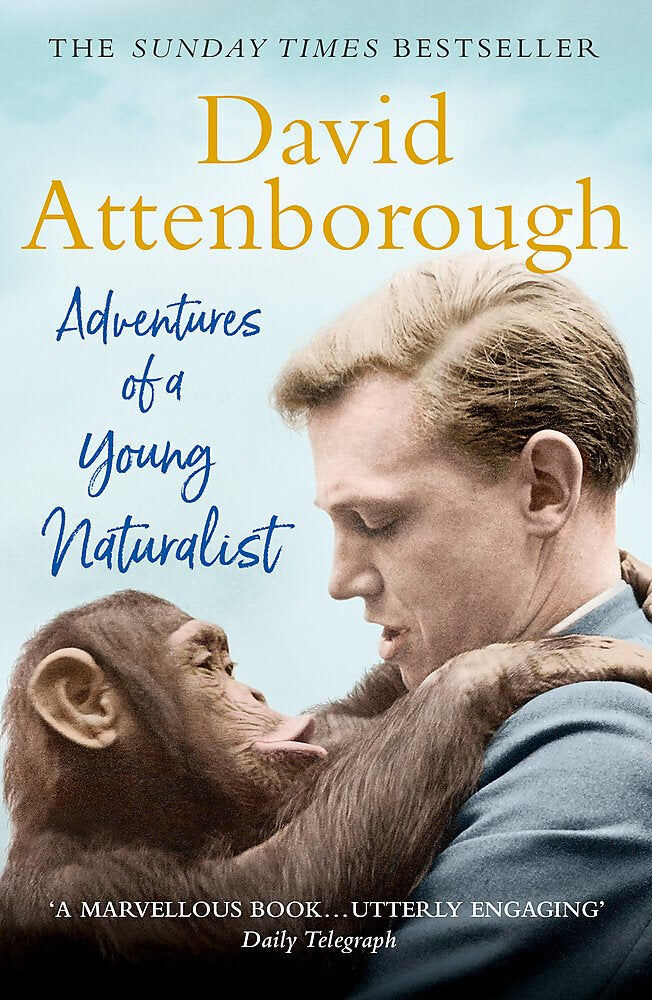
Two Roads Adventures of a Young Naturalist by Sir David Attenborough - Zoo Quest Expeditions Memoir - Paperback - Nature & WildlifeJoin young David Attenborough on his thrilling adventures as he travels the globe to capture rare and elusive animals for London Zoo. This gripping paperback memoir, 'Adventures of a Young Naturalist', gathers his early expeditions into one compelling narrative, tracing the roots of the broadcaster's extraordinary career and his lifelong devotion to the natural world. In 1954, Attenborough embarked on a journey to film his travels for a fledgling BBC series called Zoo Quest. He and his team trekked through remote landscapes in search of giant anteaters in Guyana, Komodo dragons in Indonesia, and armadillos in Paraguay. Along the way, he lived alongside local tribes, navigated unpredictable terrain and weather, and encountered an unforgettable cast of creatures. This paperback edition is a fascinating account of Attenborough's early years as a naturalist, written by one of Britain's most trusted voices on conservation.3,99 £*Shipping: 2,99 £Secure redirect to the provider
-
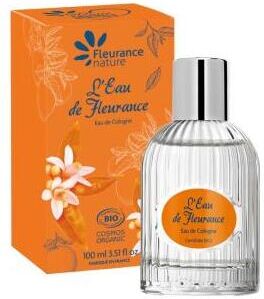
Fleurance Nature Cologne Water Spray 100 mlHealth and Beauty Colonies Fleurance Nature Cologne Water Spray 100 ml A natural and certified COSMOS ORGANIC mixed cologne. Fragrance around the Hesperides. Instructions for use: External use.\ After showering, spray on the neck and décolleté, on skin that is still damp, and let it air dry.16,70 £*Shipping: 3,99 £Secure redirect to the provider
-
How is the agreement of the past participle with the auxiliary verb avoir done?
In French, the past participle agrees with the direct object when the auxiliary verb is avoir. However, this agreement only occurs when the direct object comes before the verb. If the direct object comes after the verb, there is no agreement. For example, in the sentence "J'ai mangé la pomme" (I ate the apple), the past participle "mangé" agrees with the direct object "la pomme" because it comes before the verb. But in the sentence "J'ai mangé une pomme" (I ate an apple), there is no agreement because the direct object "une pomme" comes after the verb. **
-
What is an auxiliary verb and a main verb?
An auxiliary verb, also known as a helping verb, is a verb that is used with a main verb to form a verb phrase. It helps to express the tense, mood, or voice of the main verb. Common auxiliary verbs include "be," "have," and "do." A main verb, also known as a lexical verb, is the primary verb in a sentence that carries the main meaning or action. It is the verb that is not preceded by an auxiliary verb in a verb phrase. Main verbs can express actions, states of being, or occurrences. **
-
Before the verb.
'Before the verb' refers to the placement of adverbs in a sentence. Adverbs are words that modify verbs, adjectives, or other adverbs. When an adverb is placed before the verb in a sentence, it typically provides information about how the action is being performed. For example, in the sentence "She quickly ran to the store," the adverb "quickly" is placed before the verb "ran" to describe how she performed the action of running. **
-
What is the personal form of the verb auxiliary verb?
The personal form of the auxiliary verb is the form that changes based on the subject of the sentence. For example, in the present tense, the personal forms of the auxiliary verb "to be" are "am" for the first person singular (I), "are" for the second person singular and plural (you), and "is" for the third person singular (he/she/it). These forms change to match the subject of the sentence and indicate who is performing the action. **
* All prices are inclusive of VAT and, if applicable, plus shipping costs. The offer information is based on the details provided by the respective shop and is updated through automated processes. Real-time updates do not occur, so deviations can occur in individual cases. ** Note: Parts of this content were created by AI.